
A parked domain can mean either a hosting alias that shares an existing website or a domain held with a registrar’s holding page. In cPanel hosting, the term traditionally describes an alias: another domain name serving the same document root. Choose the arrangement that matches what visitors should see.
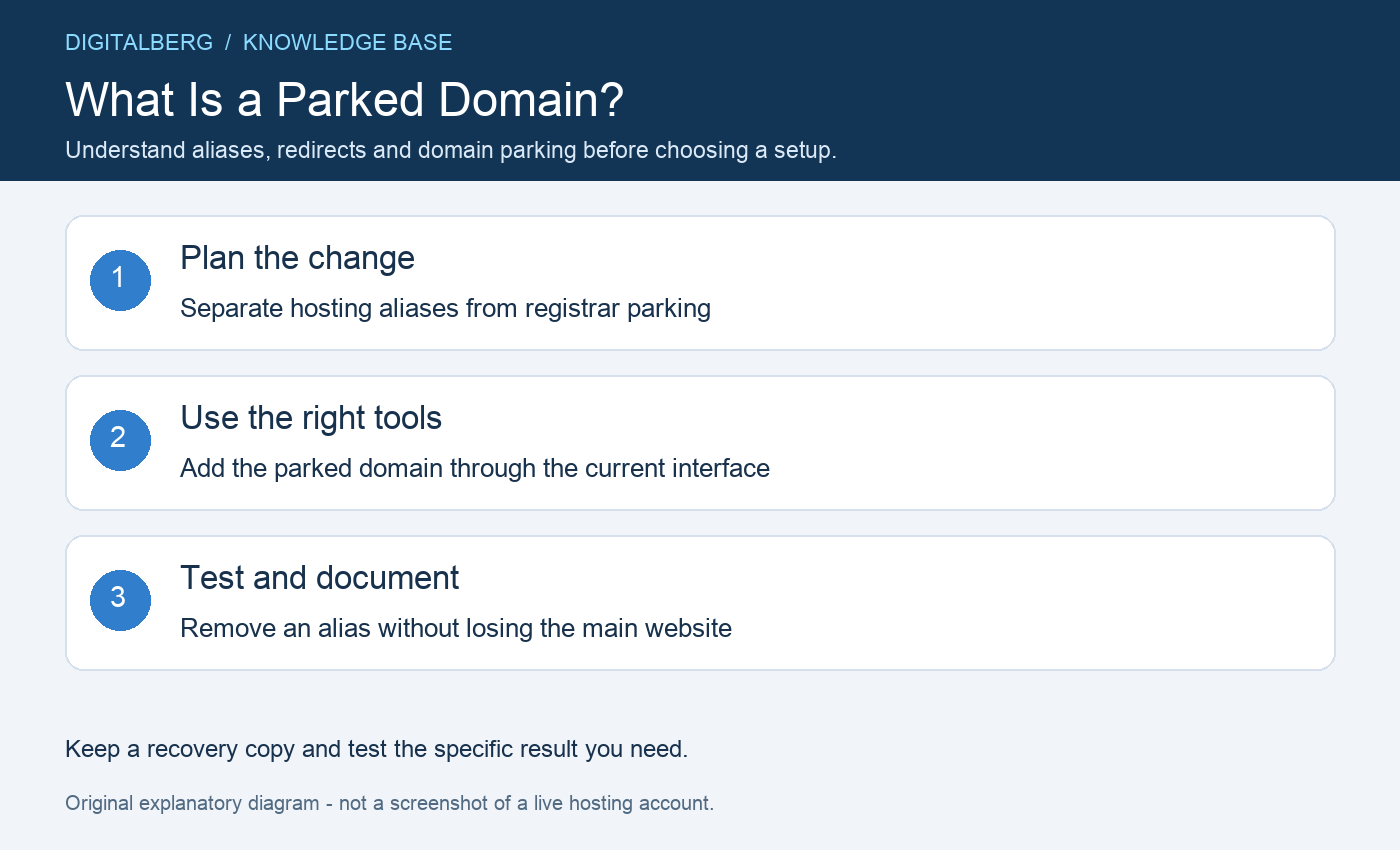
1. Parked domain: separate hosting aliases from registrar parking
A registrar may show a default or advertising page for a registered name that has no website attached. That is different from adding an alias to your hosting account.
Check where the domain currently points and who controls its DNS. Registration, DNS and hosting are separate services even when you bought them from one company.
2. Choose between an alias, addon site and redirect
An alias shares the existing site’s files. An addon domain serves a separate website. A redirect sends the visitor to a different URL, usually changing the address visible in the browser.
If your goal is simply to send a second brand name to the main website, an intentional permanent redirect is often clearer than maintaining duplicate public copies. Keep an alias only when the application is meant to support that hostname.
3. Prepare the domain and DNS
Confirm that you control the domain and that your plan permits adding it. Review existing DNS records, particularly mail and third-party verification records, before changing anything.
Changing nameservers moves authority for the whole zone, not just the website. If email remains elsewhere, recreate the necessary records first. Our DNS zone guide helps you plan that change.
4. Add the parked domain through the current interface
In modern cPanel, open Domains → Create a New Domain, enter the registered name and choose to share the primary domain’s document root when that option is provided. Older installations may call this Aliases or Parked Domains.
Review the resulting document root before submitting. If your interface does not offer the intended relationship, ask support rather than creating a separate site by accident. See the official Domains guide.
5. Check HTTPS and the application response
Make sure the parked domain has appropriate certificate coverage before testing it over HTTPS. Sharing website files does not automatically mean every hostname is covered by the same certificate.
Open the alias and check redirects, images, forms and login behaviour. Some applications deliberately redirect to their configured primary domain. Do not force an alternate hostname without checking how the application handles it.
6. Decide the preferred public address
Keep internal links and sitemaps consistent with the address you want visitors and search engines to use. If consolidating an alternate name, test a direct permanent redirect to the relevant destination, including important paths.
A canonical tag is a search hint rather than a visitor redirect. Do not assume that an alias automatically sets the right canonical URL or avoids duplicate content. Review your application’s configuration and SEO settings together.
7. Remove an alias without losing the main website
Before removal, check email, redirects, certificates and any other service that depends on the parked domain. Back up relevant settings and confirm that the primary site’s shared folder must remain intact.
Use the domain’s management controls to remove the hosting relationship. Removing it from cPanel does not cancel its registration or automatically delete external DNS. Verify the primary website afterwards and update DNS deliberately.
Parked domain questions
Does an alias include a separate mailbox automatically?
No. Mailbox availability depends on the hosting plan and email routing. Create and test the required mail service separately.
Should I use an addon domain instead?
Use a separate site when the name needs independent website files. Start with our addon domain checklist, then follow the creation guide.
Need help with your hosting?
For help with parked domain, contact DigitalBerg with the affected domain, the step you tried and a redacted error message. Never include passwords, private keys or complete configuration files containing secrets.